
Home and hearth have been practically interchangeable for centuries. As the only source of interior heating until the early 20th century, it’s no wonder then that fireplaces have long been a centerpiece of architectural design. (The Tower of London boasts some of the earliest grand fireplaces, built by the Normans.)
By the 18th and 19th centuries, the ideal fireplace featured a grand mantelpiece—highly decorated, using the best marbles for public spaces and more modest brick or wood designs in private rooms. The look was so integral to interior design that the mantled fireplace continued into the 20th century as a heat register when boilers took over.
Over the years, we always keep an eye out for fireplaces – and it’s paid off. Our mantel collection today includes original pieces from the 1800s to the 1900s in a variety of materials – stone, tile, brick, and old growth wood. The styling ranges too. You’ll find elaborate Rococo and French Empire designs to understated Federal and Traditional geometries.
Fireplaces are considered an interior architectural element–meaning that they were included in the designs for the building. Time and money were spent curating a piece that echoed that building’s design era or style, connecting the heart of the home to the building’s exterior.
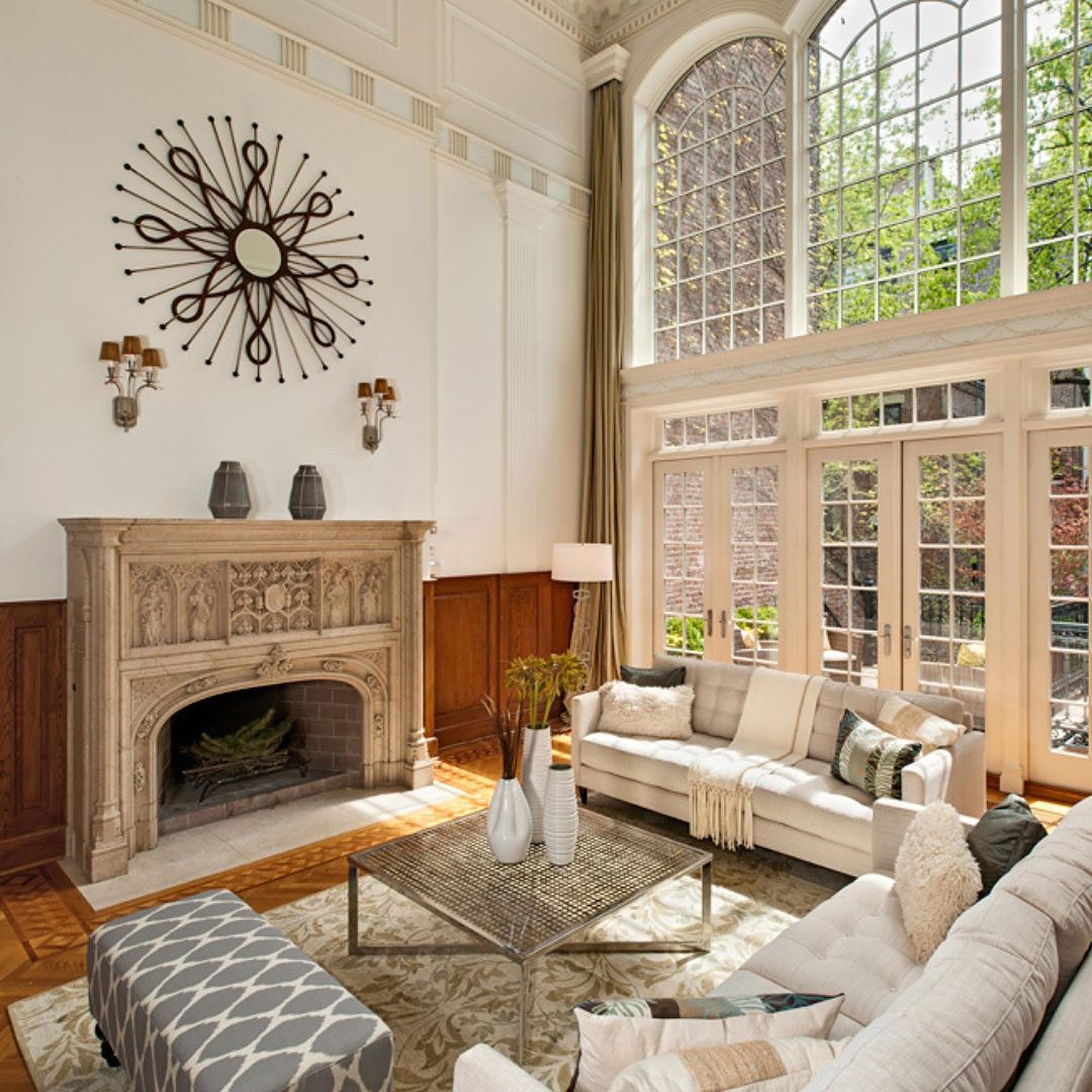
Early 20th Century NYC’s Hotel Landmarks
The Plaza Hotel NYC opened on the edge of Central Park October 1st, 1907. The interior was kitted out in French Chateau style with Carrara marble mantels throughout the eighteen-floor building. The public spaces and suites featured grand, opulent designs, while private rooms’ mantels had more streamlined looks.
The Plaza’s architect came recommended, already having completed two hotels in the 1890s: the Waldorf and the Astoria. By 1929, the now-combined Waldorf-Astoria Hotel was being outshone. The property was closed (and sold to the developers of the Empire State Building) while investors arranged a new location for Waldorf-Astoria 2.0: the grand Art Deco establishment we know today.
Art Deco is typically known for a geometric aesthetic, but it also took inspiration from older European styles. The interior of the new Waldorf-Astoria leaned towards the latter. Antique mantels were imported from Europe for the interior: a range of English and French Regency styles in marbles, limestones, and woods–all of which OGT carefully preserved.
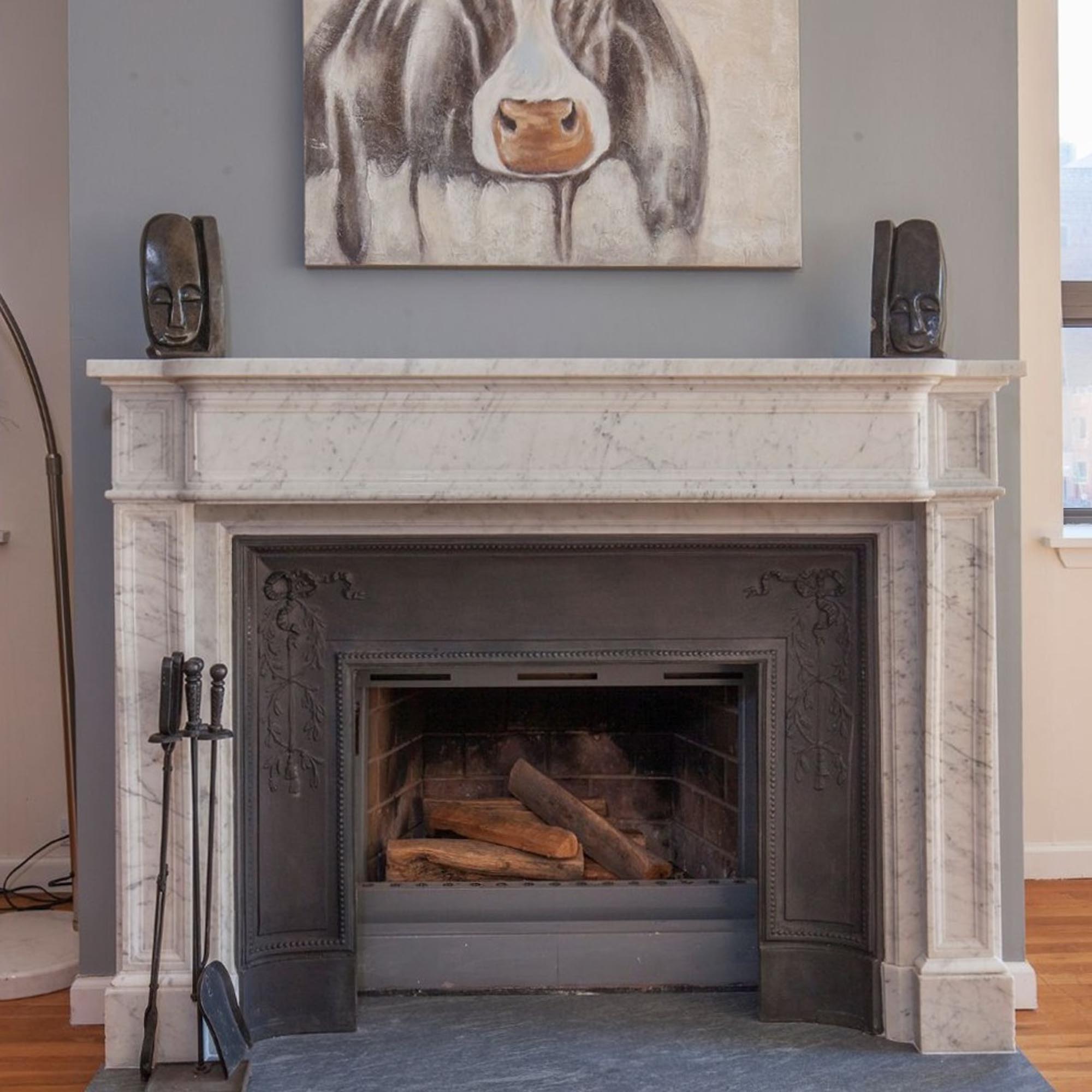
OGT On the Scene: Mantel Salvage and Buy-outs
By the second half of the 20th century, fine antique European mantels remained desirable statement pieces. The NYC-based Danny Alessandro & Edwin Jackson Mantel Company specialized in procuring such centerpieces for private clients, including a White House resident. Olde Good Things bought out the company’s collection of exquisite marble mantels from the 18th and 19th centuries.
When the Plaza Hotel was refurbished in 2005, Olde Good Things secured several of their mantels at a public tag sale before the developer reached out to arrange a further sale, so we initially had quite a number of Plaza mantels. That was over twenty years ago; today, only a select few remain on our website.
A decade after the Plaza’s refurbishment, the Waldorf-Astoria started renovations. Olde Good Things was on-site to salvage pieces … including many of the imported antique mantels.
Noteworthy mantels were not exclusive to hotels, and we consistently expand our collection. Some of our recent highlights include Italianate curved mantels salvaged from Brooklyn Brownstones and specialty pieces from manors along the East Coast.
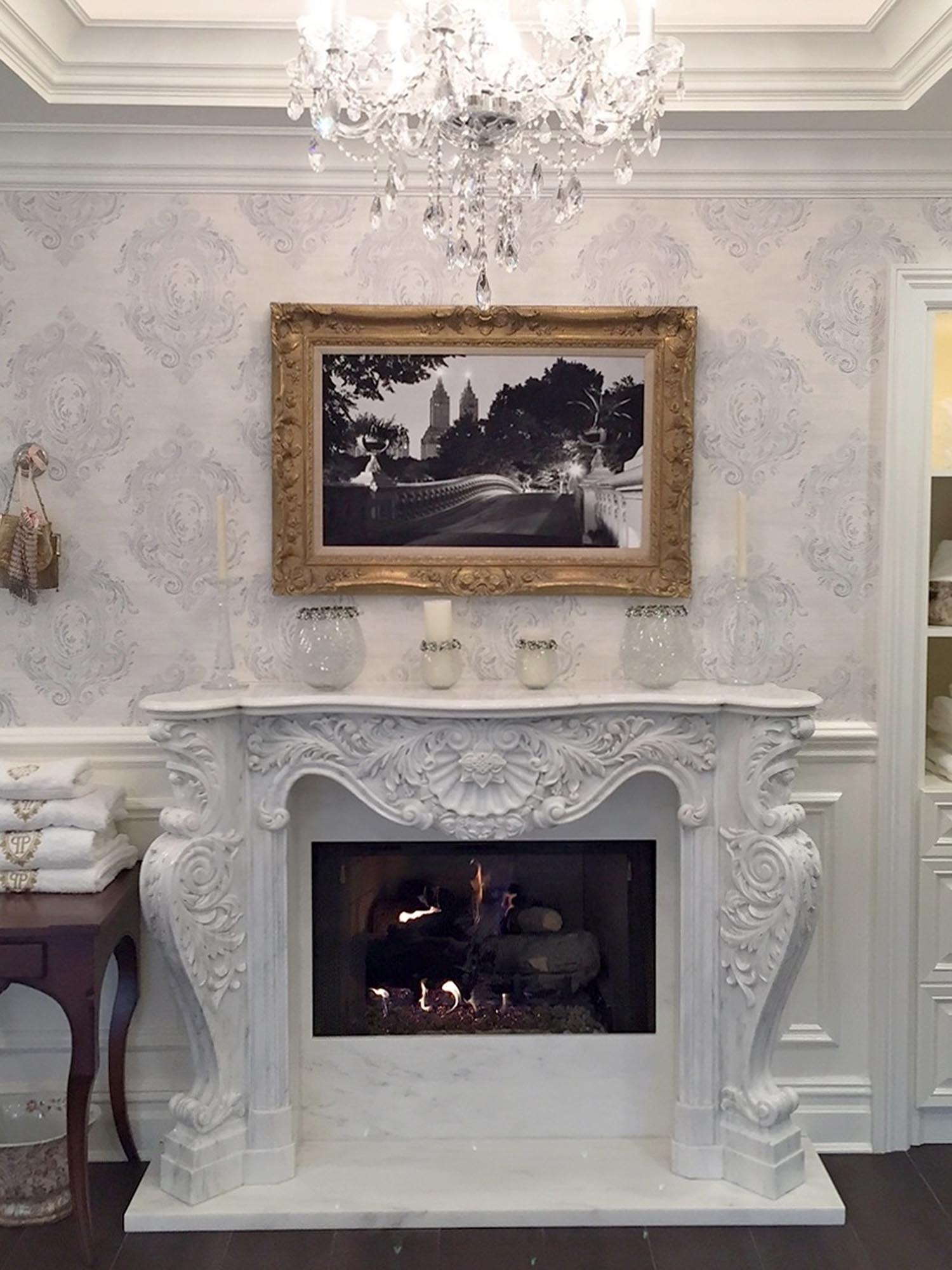
How OGT Salvages Mantels
Every mantel salvaging project we take, regardless of origin, requires careful precision. Mantels must be extracted undamaged from the surroundings before disassembly. Each mantel–visually solid when installed–is typically three to twenty or more individual pieces once fully disassembled.
Every piece has to be identified, transported, and accurately reassembled for a successful salvaging. There are risks to every step, sometimes as simple as cracking a thin piece of marble by laying it down on an unseen loose nail.
Before we start any project, we assess the mantel’s viability: the condition of the piece itself, the risk level of salvaging, and whether the material, design, and condition of the piece are worth that risk. If a mantel joins the OGT collection, it is because that mantel has been deemed a high-quality antique worth the effort by expert opinion.
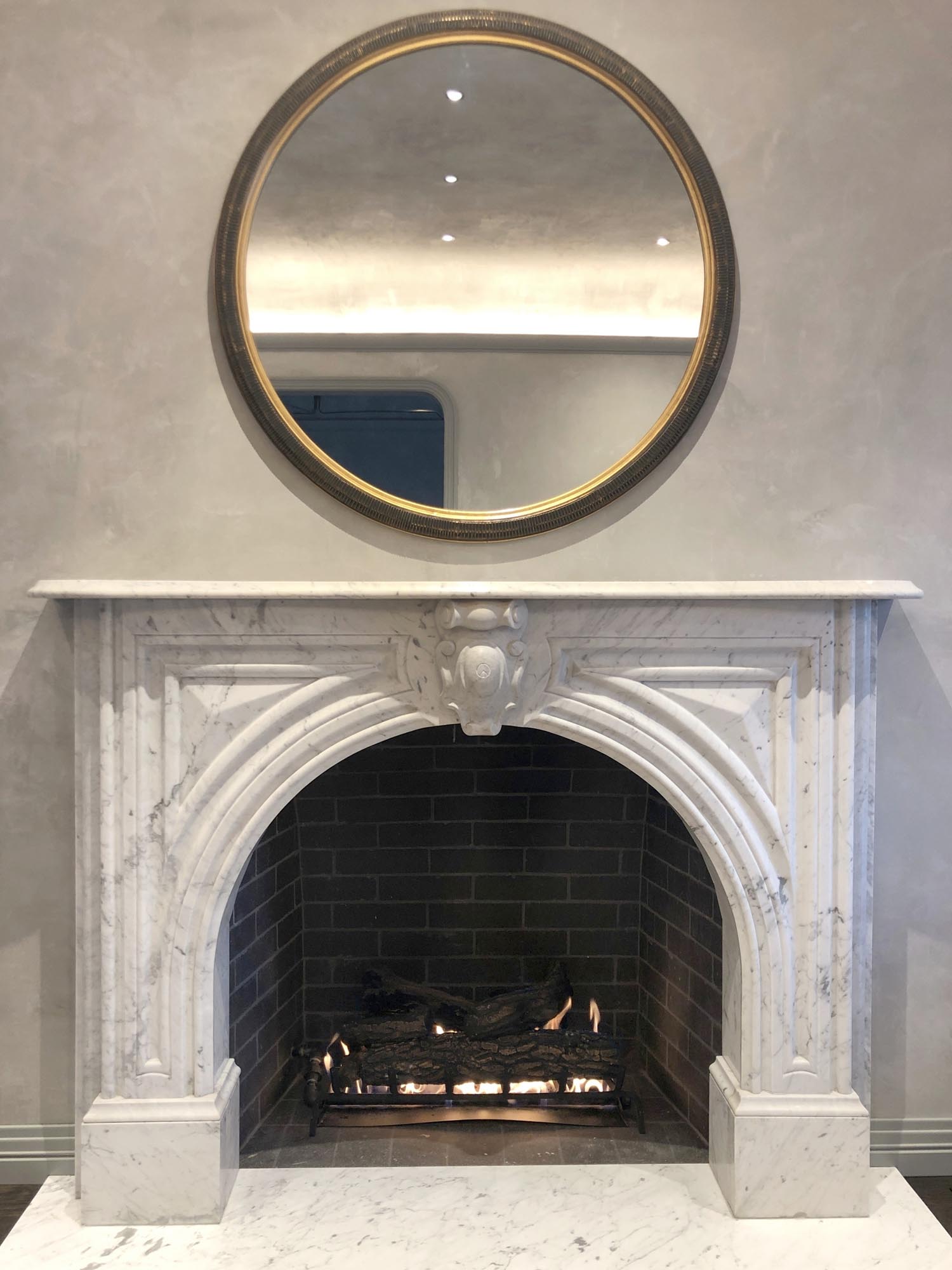
Bring Timeless Beauty Home
That opinion has been honed through years of building our collection, from marbles to limestone to ceramic tile to wood mantels.
We have marble colorings from mottled greens, blacks, and greys to veined whites and greys. From Portoro to Breche d’Alep to Verde Antico, we have a wide range of marbles in the collection, some pieces even feature pristine Statuary marble, no longer possible to quarry.
The styles range from highly decorated to sleek lines, a range echoed by our limestone pieces–some finished with faux marble designs.
Our wooden mantels come in a range of treatments as well, including painted, stained, and burl veneers. Some even feature eye-catching overmantel mirrors–one mahogany mantel stands over 10’ tall and has no less than five mirrors.
OGT’s salvaged mantels are impossible to replicate today. Whether a raw material is unavailable or the craftsmanship has been lost, these pieces are a time-capsule of timeless quality and historic style.
Visit our mantel collection now to see which “heart of the home” will transform your project.

