
A cell phone dings around the clock at our NYC showroom. The phone belongs to Jim D, our location manager and furniture collection curator. And the dings? Those are texts from pickers, independent runners offering potential items for our furniture collection.
But what determines which furniture pieces will fit the collection? Let’s start with some background…
During the late 19th century to the mid-20th century (pre-WWII), quality furniture pieces were sourced from a wide variety of small, local shops – all of which had their own mark. Finding these marks today can provide clues to quality, however, it’d be a formidable—if not impossible—job to categorize all of the maker marks, from 100+ years ago. In addition, many pieces don’t have a mark at all.
To source pieces of timeless quality, Olde Good Things looks to the craftsmanship itself.
Materials
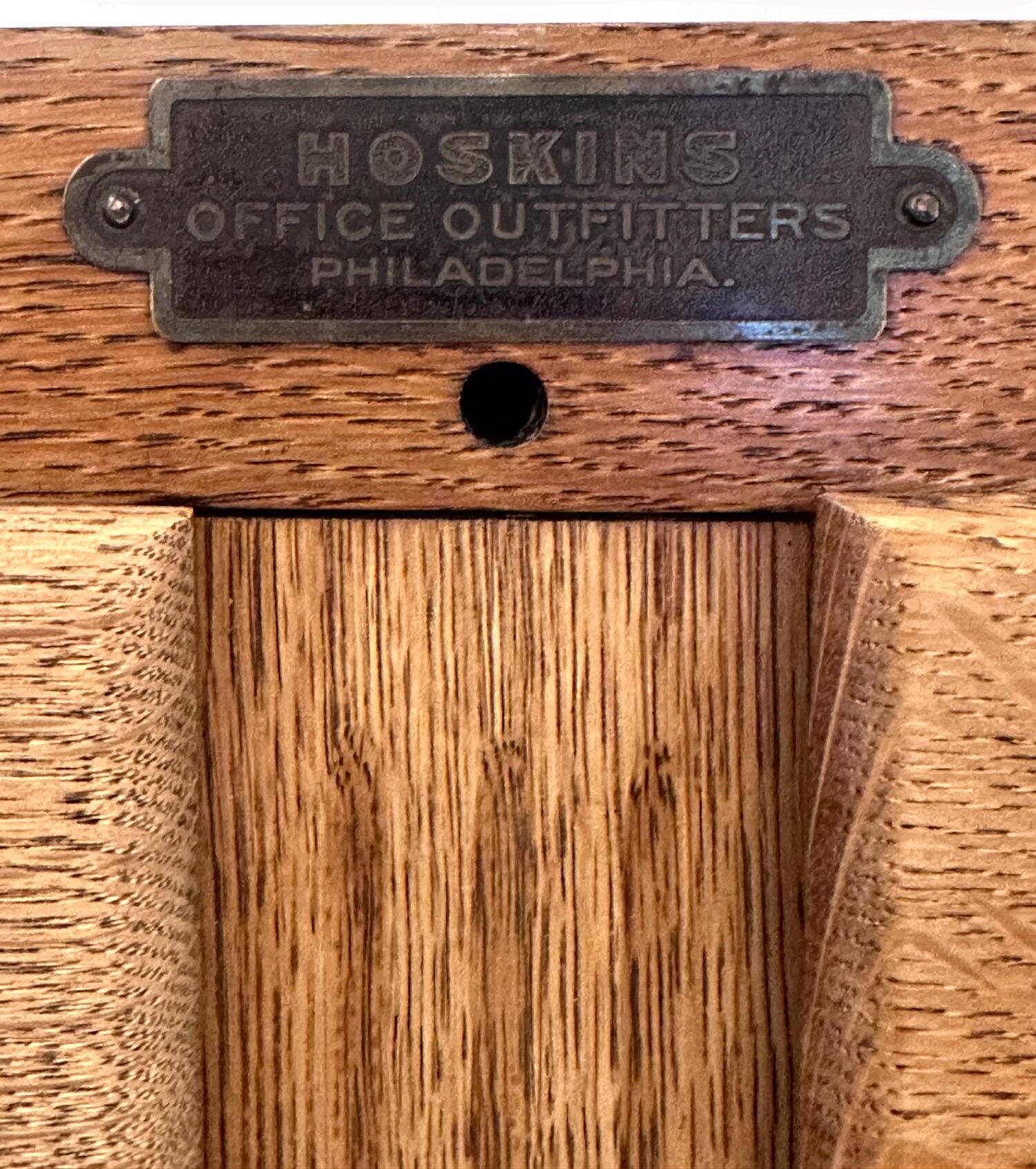
Items that stand the test of time start with durable materials. For many OGT furniture pieces, that means solid wood–often hardwoods like oak or maple. Veneer pieces can be impressively long-lasting as well, as showcased by most of the barrister bookcases on the shop floor. In truth, a solid-wood piece will often have veneered elements like drawer fronts.
How the material is processed can also indicate quality. Quarter-sawn oak, for instance, is a gorgeous cutting method that highlights the grain but also wastes more timber, so it was only used for high-end pieces. In the same vein, shop-sawn veneers are most commonly used for decorative finishes but lose quite a bit of timber to sawdust.
Joinery
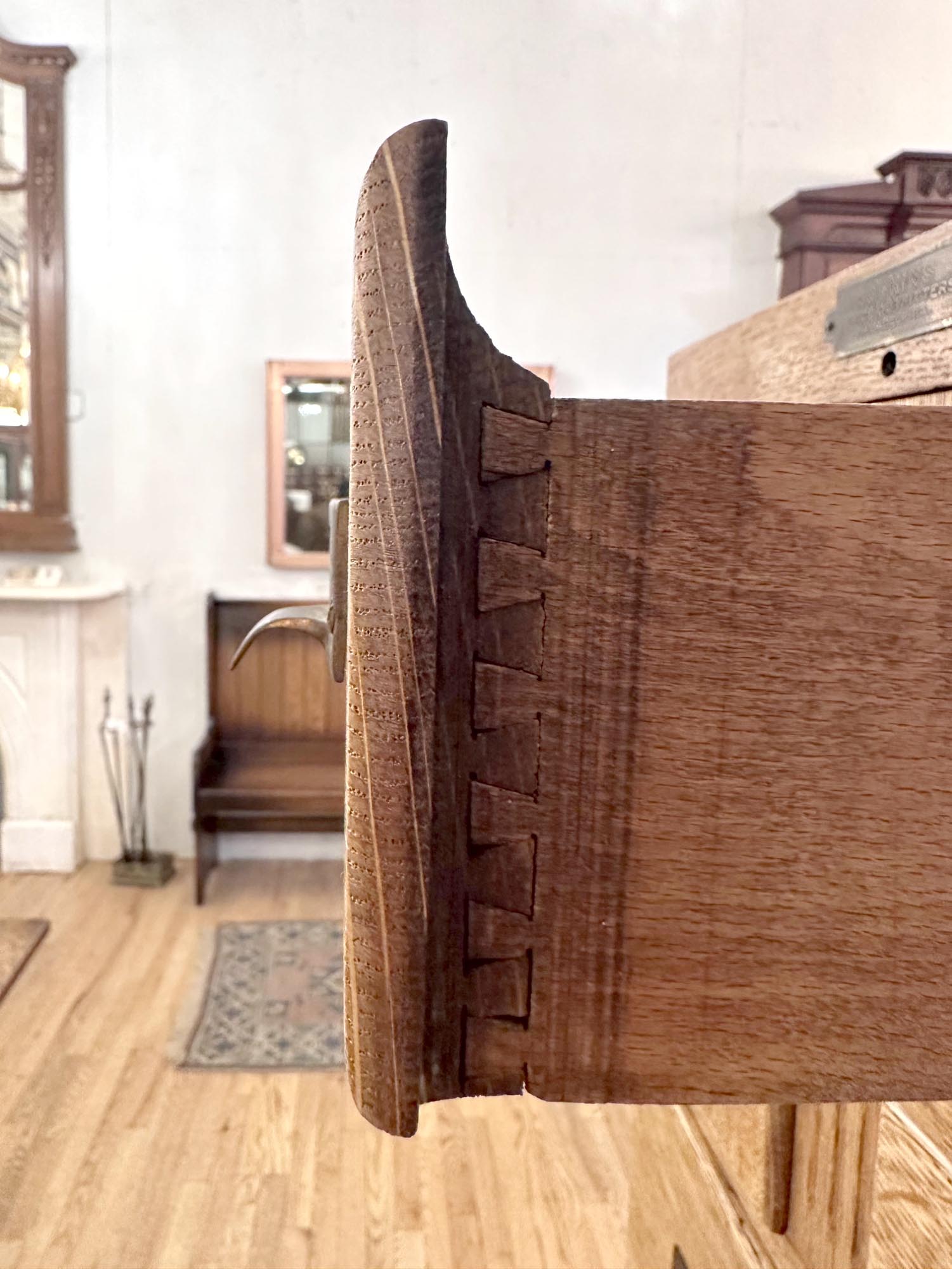
Any material’s durability can be undermined by poor construction, so joinery is the next defining quality. Finger joints and dovetailing assembled well can fit together like puzzle pieces, even a century later. On the other hand, we do have some wiggle room thanks to our full woodworking shop if a structurally sound piece is a bit age-worn.
Technical Details

The small things, like drawer stop hardware or rollers, show an original attention to detail. If they still work smoothly today, that’s a strong indicator of good craftsmanship, too.
Decorative Detailing

Attention to areas that don’t impact functionality—raised panels, sculpted corners, trim work—are equally strong signs of quality craftsmanship. This includes hardware – solid cast as opposed to pressed metal, brass and bronze versus iron, and more are all indicators of quality.
Once craftsmanship is established, functionality is the next key. Some items retain their original function, like barrister bookcases, clawfoot oak dining tables, and an old-school workbench with cabinets salvaged from … well, an old school.
On the other hand, functionality can be retained if an item can be repurposed. A post office sorter can be turned into a wine rack. Sheet music cabinets are reutilized as jewelry cabinets. Our manager Jim shared his favorite recent acquisition: a hardware store countertop with a myriad of cubbies and storage underneath, adapted to kitchen use.
The final key is scarcity. If an item is well-crafted, functional, and rare, it’s worth jumping on fast. Jim pointed to a 14 foot long harvest table as an example. That piece merited responding to a picker’s text before 7am on a Sunday.
Jim sums up what he looks for in those texts as “good quality-built furniture from a hundred (plus or minus) years ago.” But behind the deceptively simple goal, there is a practiced eye spotting the details of good craftsmanship beyond what a maker’s mark can tell.
See for yourself today: visit our online furniture collection.


