
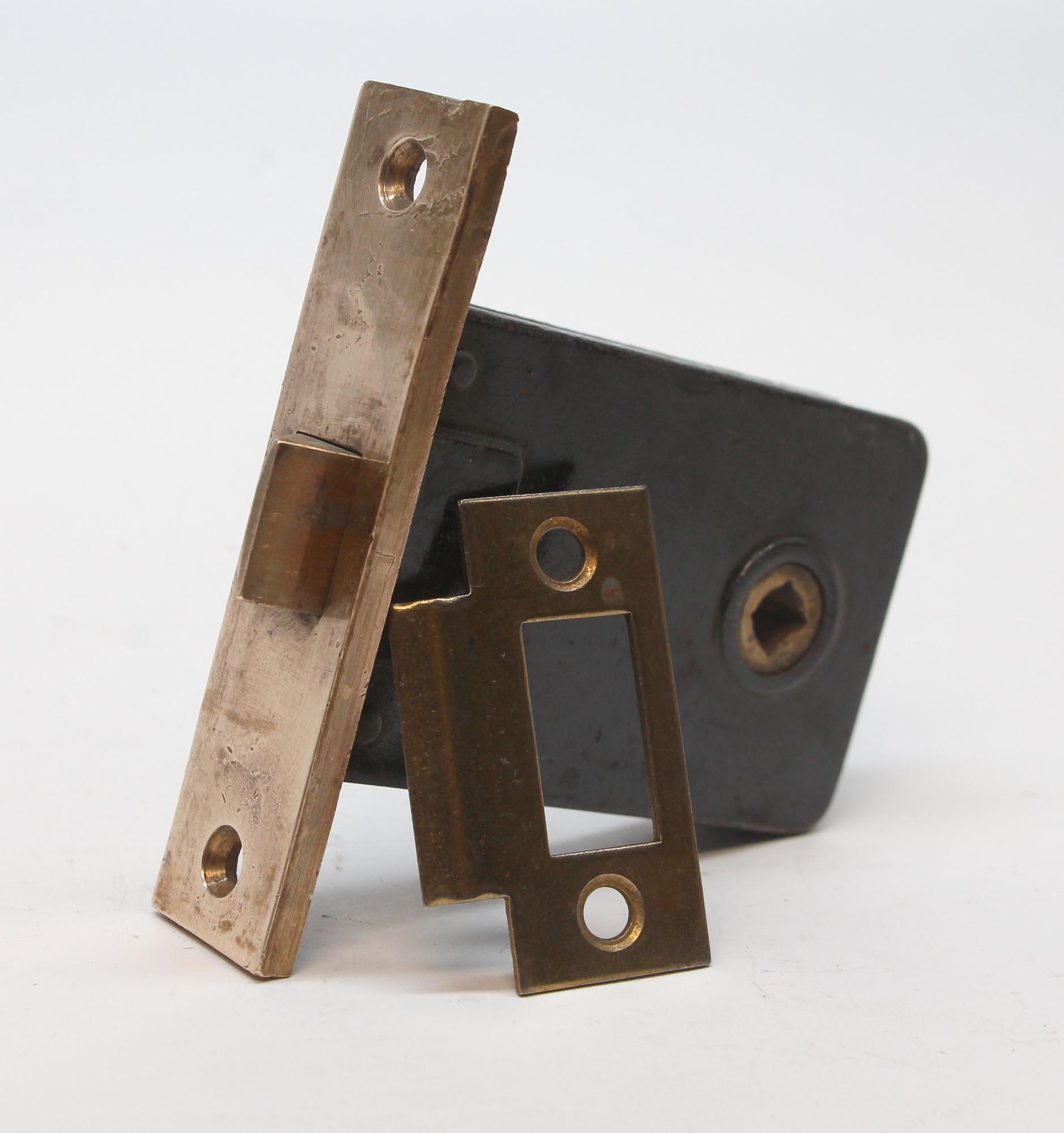
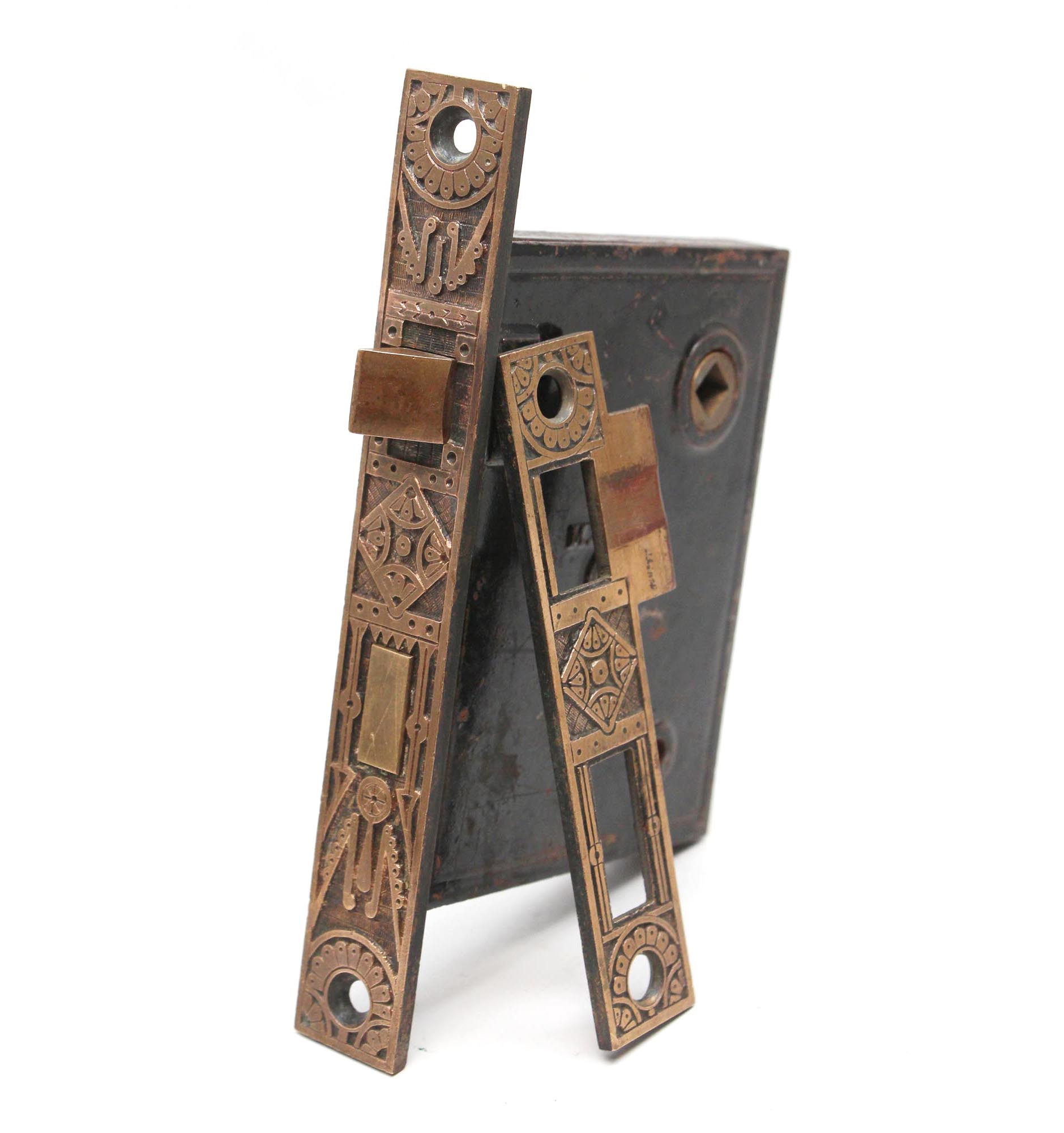
Mortise locks were popular during the 19th century in only the most affluent homes. Today, mortise locks are found in older buildings, commercial properties, and high-end residential doors. This type of lock was originally more expensive than others, possibly because they are stronger and more durable than the standard cylindrical lock. The mortise lock is also elegant and versatile; it is compatible with many variations of handle and hardware styles.

But how do you replace a mortise lock to preserve functionality while maintaining the integrity of your beautiful custom door? Olde Good Things has a few tips from experts to assist you in measuring and matching your mortise locks.
What is a Mortise Lock?
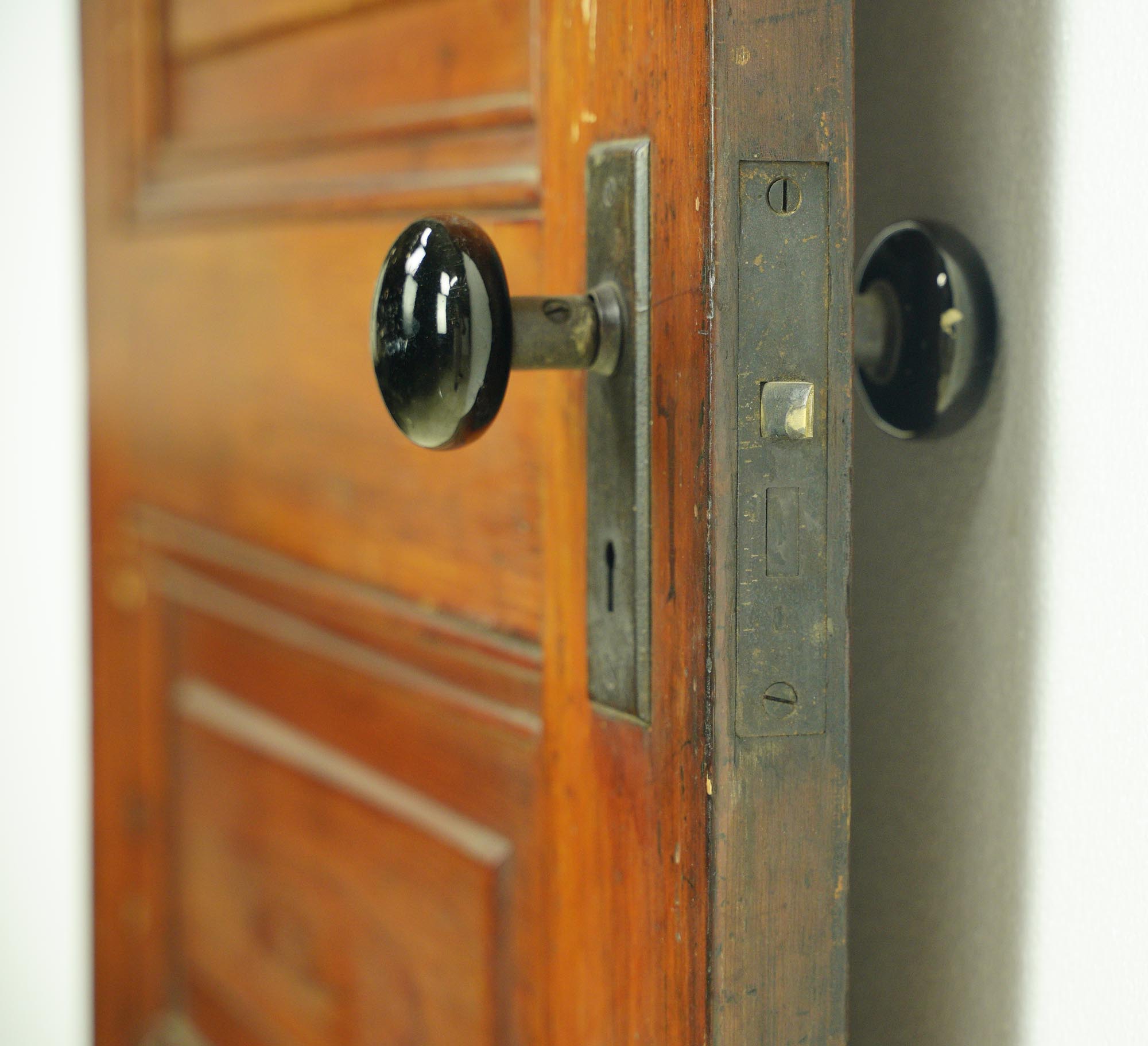
A mortise lock is a type of lock that is installed into a pocket or “mortise” that is cut into the edge of a door. While surface-mounted locks are attached to the face of a door, a mortise lock is housed inside the door itself, offering enhanced security and durability.
Key points about mortise locks:
- Installation: Requires a rectangular cutout in the door to house the lock body.
- Function: Can offer both latch (for holding the door closed) and deadbolt (for security) functions in one unit.
- Common Use: Older buildings, commercial properties, and higher-end residential doors.
- Advantages: Stronger and longer-lasting than standard cylindrical locks and enhanced compatibility with different handle styles and hardware finishes.
Types of Mortise Locks
Mortise locks come in an array of styles. In this article, we will discuss three basic types of mortise locks that may be the most common you will need to replace.
Entry Locks
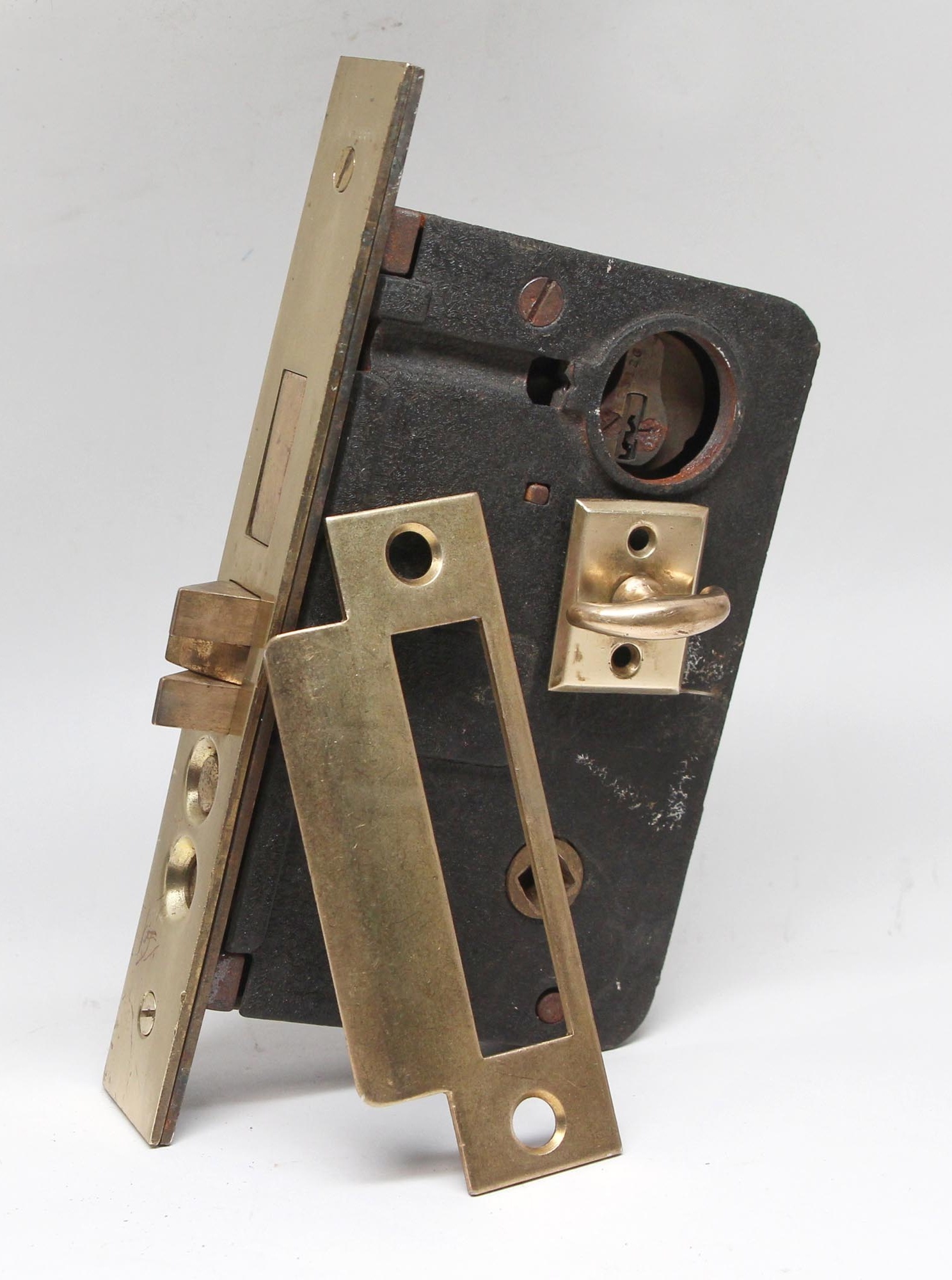
An entry mortise lock is specifically designed for exterior doors – like the front or back entry – where security is a priority. The entry mortise lock provides both a latch to hold the door closed and a deadbolt for security. An average antique cylinder deadbolt ranges from 1 to 2.5 inches in diameter.

Privacy Locks
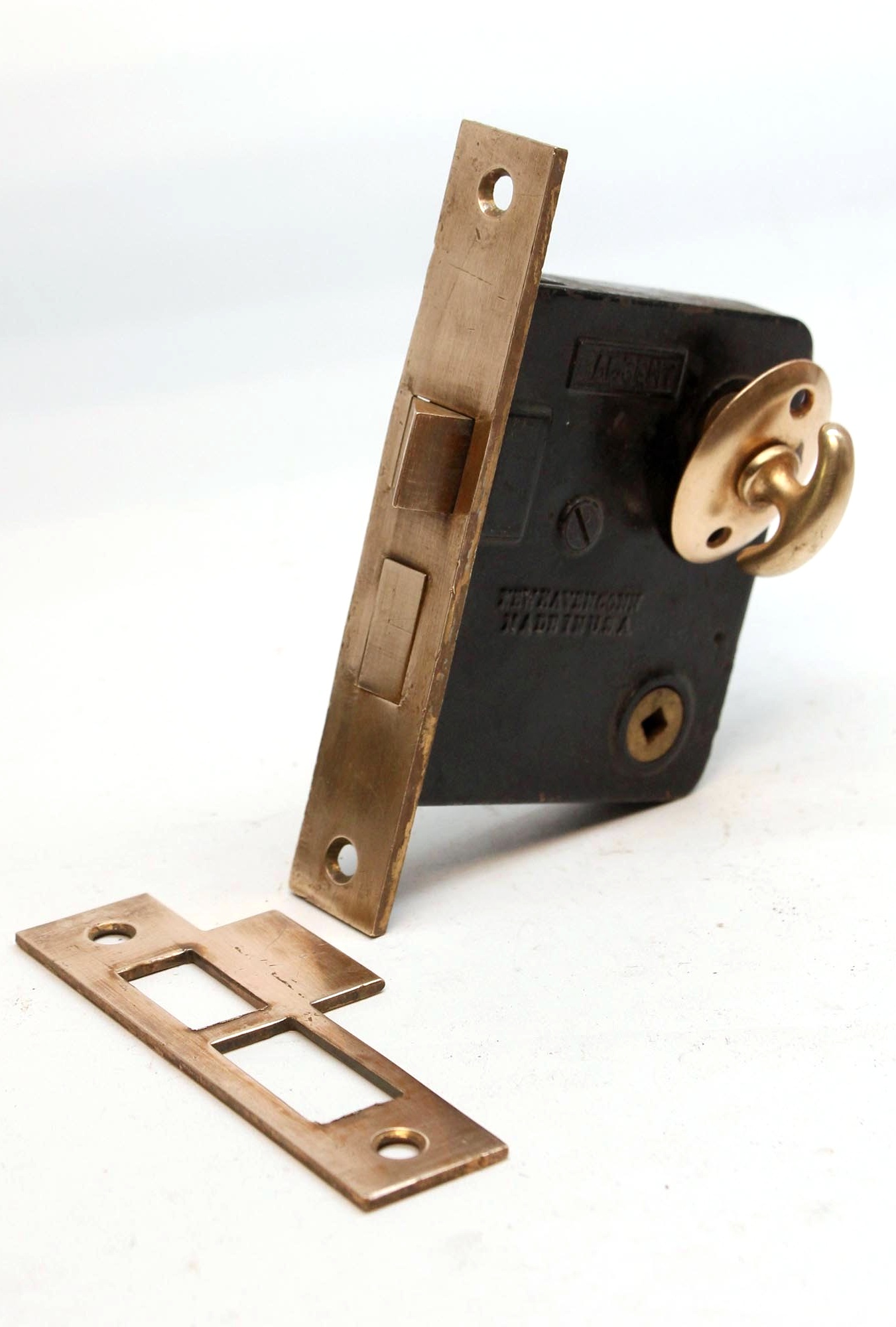
Privacy mortise locks are used for bedrooms, bathrooms, and offices – any interior spaces where privacy is desired. It is rare to acquire an original key with an antique mortise lock, so Olde Good Things offers this type of lock as a passage mortise. A privacy mortise lock may also use a thumb turn variation.
Passage Locks
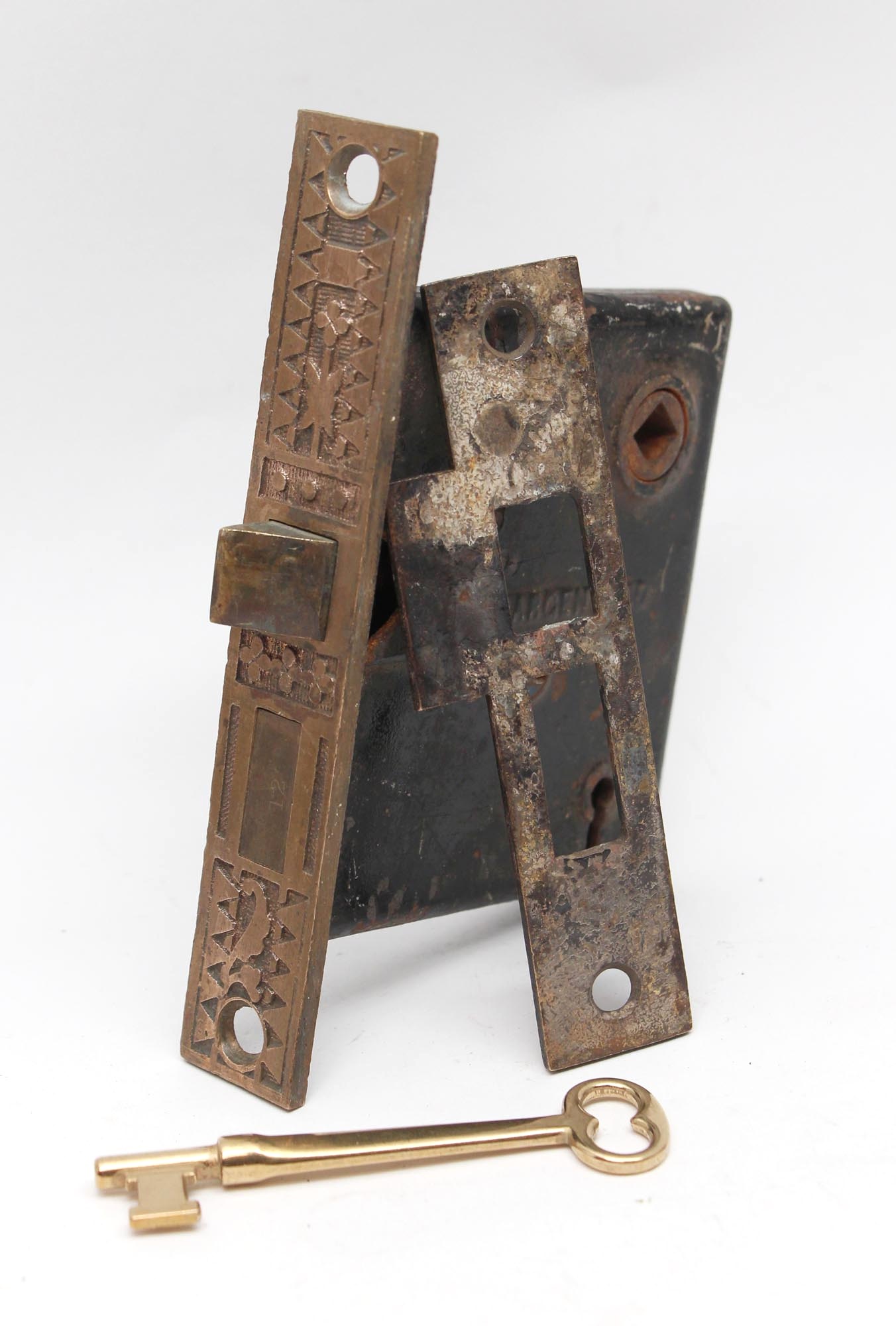
A passage mortise lock is designed for interior doors that don’t require privacy or security. They operate with a simple handle and latch to keep the door closed.
How To Measure Your Mortise Lock For A Replacement
1. Remove the lock – doorknobs, thumb turns, and cylinder locks first. Next, remove the screws and faceplate. Take photos of both sides of the door and faceplate to send with your request.
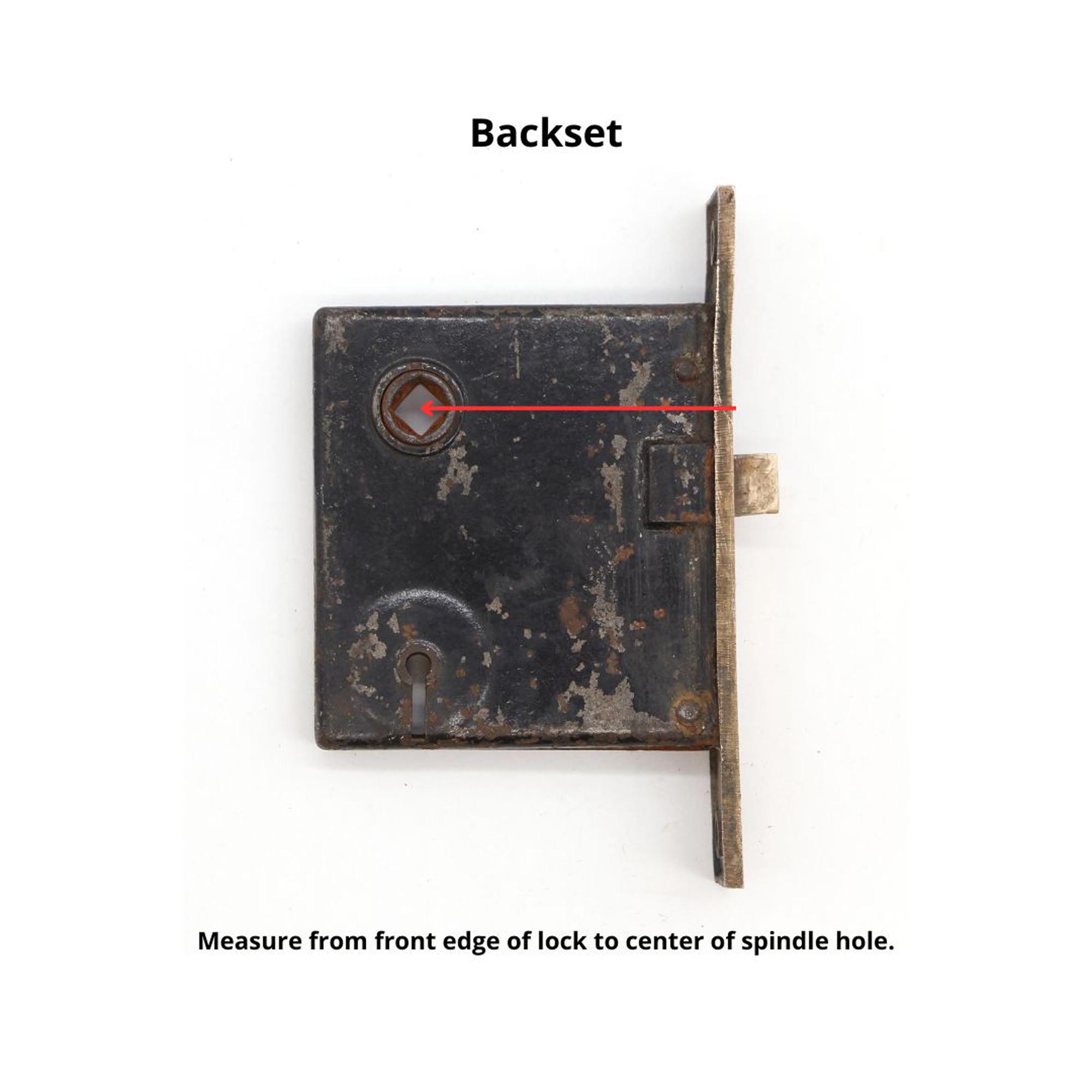
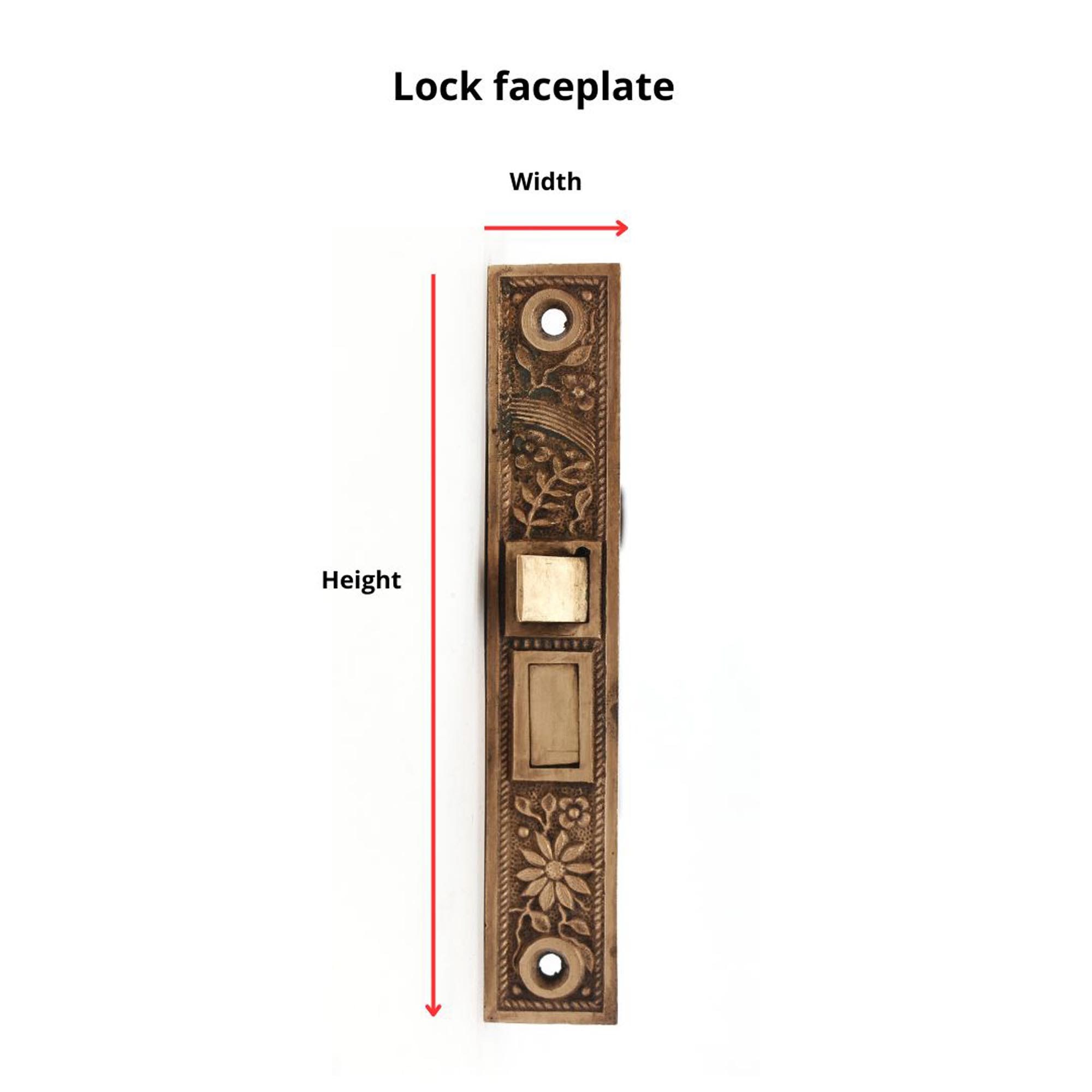
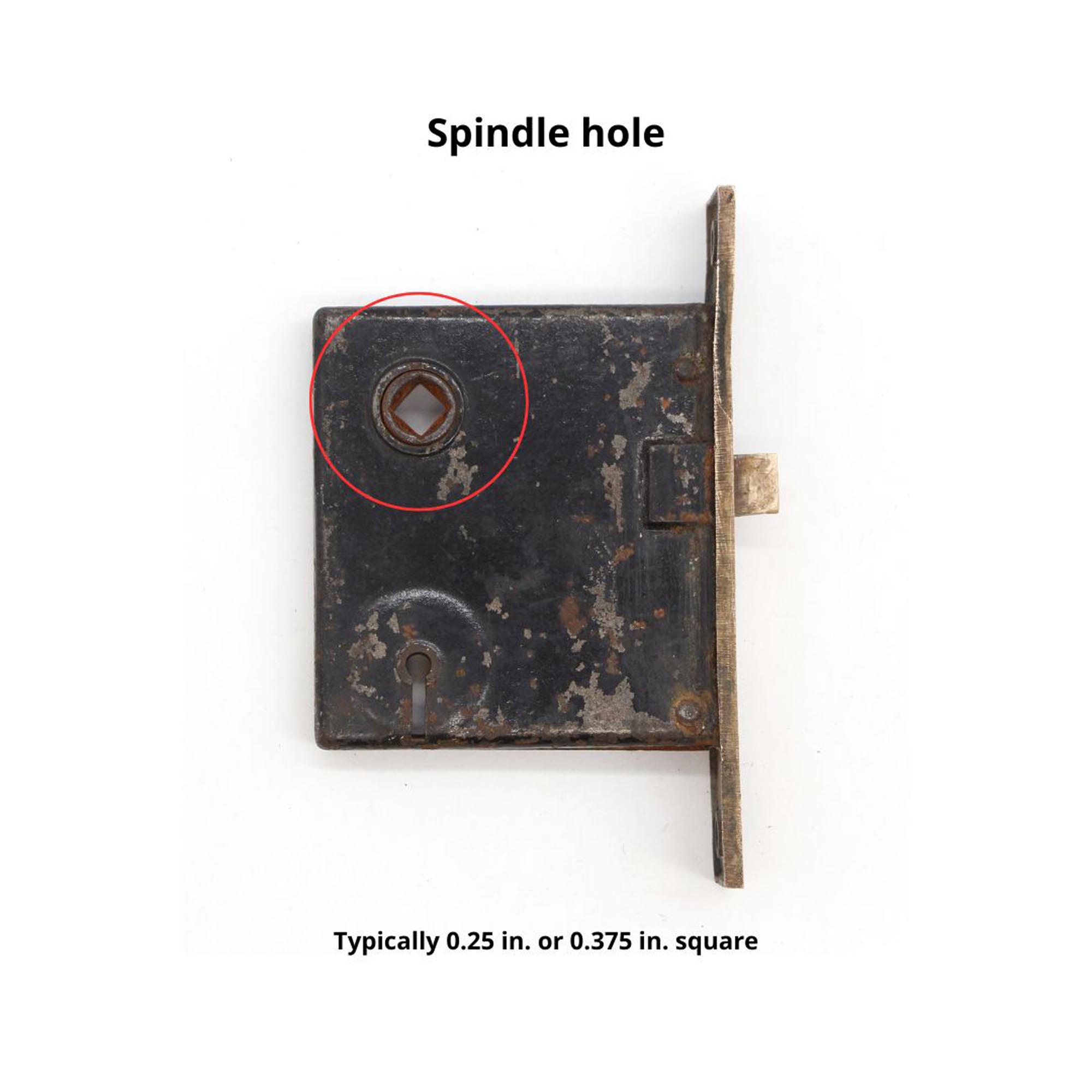
2. Measure: Identify which type of lock you have from the above photos. Measure the faceplate, lock body, spindle hole, and back set in inches. These will be all the needed measurements for a passage lock. For an entry or privacy lock, obtain the additional two measurements listed below.

Measuring Entry Locks
Replacing an entry lock requires two additional measurements.
1. Measure the cylinder lock hole diameter.
2. Measure the drop spacing from the center of the spindle hole to the center of the cylinder lock hole.

Measuring Privacy Locks
Replacing a privacy lock requires two additional measurements.
1. Measure the thumb latch hole.
2. Measure the drop spacing from the center of the spindle hole to the center of the thumb latch spindle hole or the center of the top round part of the keyhole.


Although the process of replacing your antique mortise lock can be complex, it will preserve the beauty, functionality, and integrity of your doors and locks. We have a large selection of antique mortise locks stored in organized filing cabinets, representing a wide range of styles and configurations collected over the years.


For more information and a special video presentation on adapting beautiful and secure antique hardware to contemporary doors, visit our article on How To Adapt Antique Hardware To Modern Doors. For questions about locks or to request a replacement, send pictures and measurements to [email protected].


